
Post 22 of 29 in the AZ Hive series
Winter is when beekeeping in a cold climate gets serious. The bees cluster, the temperatures drop, and a hive that’s well-set-up makes it to spring; a hive that isn’t doesn’t. Our setup gets a specific winter configuration once the weather turns. Three pieces.
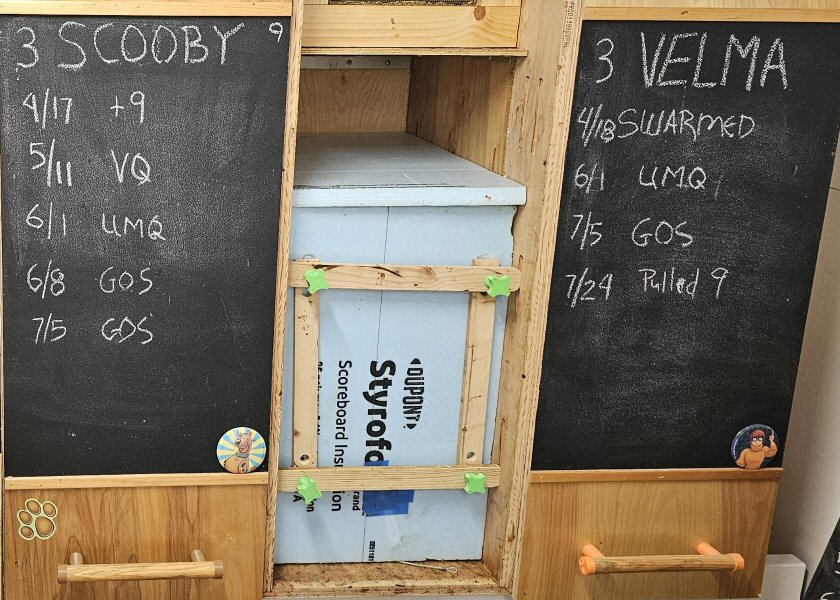
Insulation. Two of each hive’s four chambers get foam insulation for the winter. One inch of foam covers the inner door of each of the bottom two chambers. Two inches sit on top of the second chamber to create a thermal cap above the cluster.
The 1″ foam over the inner door has a small wooden block built into it, with a hole drilled through and the edges sealed to the foam with blue painter’s tape. When I want to vaporize oxalic acid into the hive for mite treatment, I push the vaporizer probe through that hole and let the treatment run. The insulation is tight enough to the hive that very little vapor, if any, seeps into the interior of the shed. Even so, I always wear my respirator.
Heat from the freezer. This is the one that surprises people. We bring the upright freezer into the shed for the winter, and it actually heats the space — not the way you’d think (it doesn’t blow warm air), but the compressor on the back of a freezer is constantly dumping waste heat into the room. In winter, that waste heat is a benefit. A working freezer in a small insulated shed gives off real BTUs.
Electric heater on a thermostat. The freezer alone isn’t enough. We added an electric space heater on a 40°F thermostat. Below 40, the heater kicks on. Above 40, it shuts off. The hives never see a temperature below 40 inside the shed, which means the cluster doesn’t have to work as hard, the bees consume less honey to maintain core temperature, and we don’t lose colonies to bitter cold the way you can in an unprotected setup.
Forty isn’t warm. It’s not meant to be — bees still cluster, still consume stores, still behave like winter bees. The point is just to take the absolute worst nights off the table. No subzero nights. No deep-freeze risk. Just a steady “cold but manageable” range that the bees handle on their own.
Three pieces: foam, vaporizer port, heat. Modest in cost, modest in effort, but the difference between a stressed winter and a normal one is bigger than you’d think.
Next: Living With the AZ: Advantages and Disadvantages — five years in, what works and what doesn’t.