
Post 10 of 29 in the AZ Hive series
On the bottom floor of each hive sits a removable tray — sealed in front, slot-loaded from the back. It’s the first line of defense against the things that want to live in your hives without paying rent.
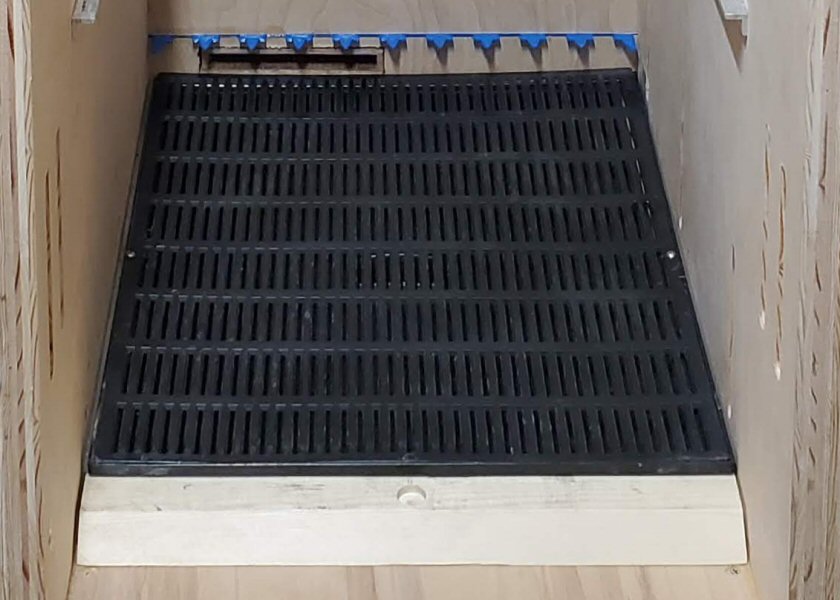
I started with a Dadant 10-Frame West Beetle Trap Tray & Cover (SKU M015404) and modified it to allow the cover to stay in position while I slide the tray out. The cover is a perforated screen similar to a queen excluder, but with smaller slits — bees can walk on it, while small hive beetles, mites, and other debris fall through. Below the screen, the tray catches whatever drops.
The tray pulls out from the back of the hive without opening the chamber where the bees actually live. That’s the part I cared about most.
At the back of the hive — on the front edge of the tray as it sits in place — there’s a sloped wood board. A small ramp. When bees get shaken off a frame onto the Marching Board during an inspection, they walk back to the hive, up the ramp, and home.
I add a thin layer of mineral oil to the tray. Anything that falls in — mites, beetles, debris — gets stuck. It’s also a low-key diagnostic: a heavy mite drop tells me one thing, beetle bodies another, all without opening the hive.
The current plastic ones work, but I’m planning to upgrade the tray portion to metal — easier to clean, and more durable for the long haul.
Next post moves up one floor, to the steel rods that the frames sit on.
Next: Frame Support Rods, Spacers, and Dividers — the hardware that turns a cabinet into four working hive chambers.
Leave a Reply