
Post 20 of 29 in the AZ Hive series
One of the hives swarmed on the day we tried to move them. Of course it did.
By that point we’d been planning the move for months. The shed was built, the mural painted, the entrances installed. The Langstroth colonies were sitting where the shed would eventually go, overwintered on a clever little workaround. All we had to do was put the shed in place and transfer the bees inside. Three colonies, six chambers each set up and waiting — what could go wrong?
A swarm, apparently.
The overwinter trick. Knowing the shed wasn’t going to be finished before flying weather, I needed to make sure the bees were going to orient to the shed location. We figured out that a steel pallet — the kind with cross-bracing — flipped upside down was exactly the right height that the Langstroth entrance lined up with where the shed entrance would eventually be. So the colonies were moved while the ground was still frozen and placed on the flipped pallet, at the right height for the bees to make their spring orientation flights. When the shed eventually slid behind them, their entrance was already in the right place. They barely had to relearn anything.
Site prep. Before the shed could go in, we prepped the ground. Pylons set into the ground for the shed corners. A vapor barrier mat laid down to block weeds and moisture. Gravel over the mat. The end result: a clean, level, dry pad the shed could sit on for the next decade without rotting.
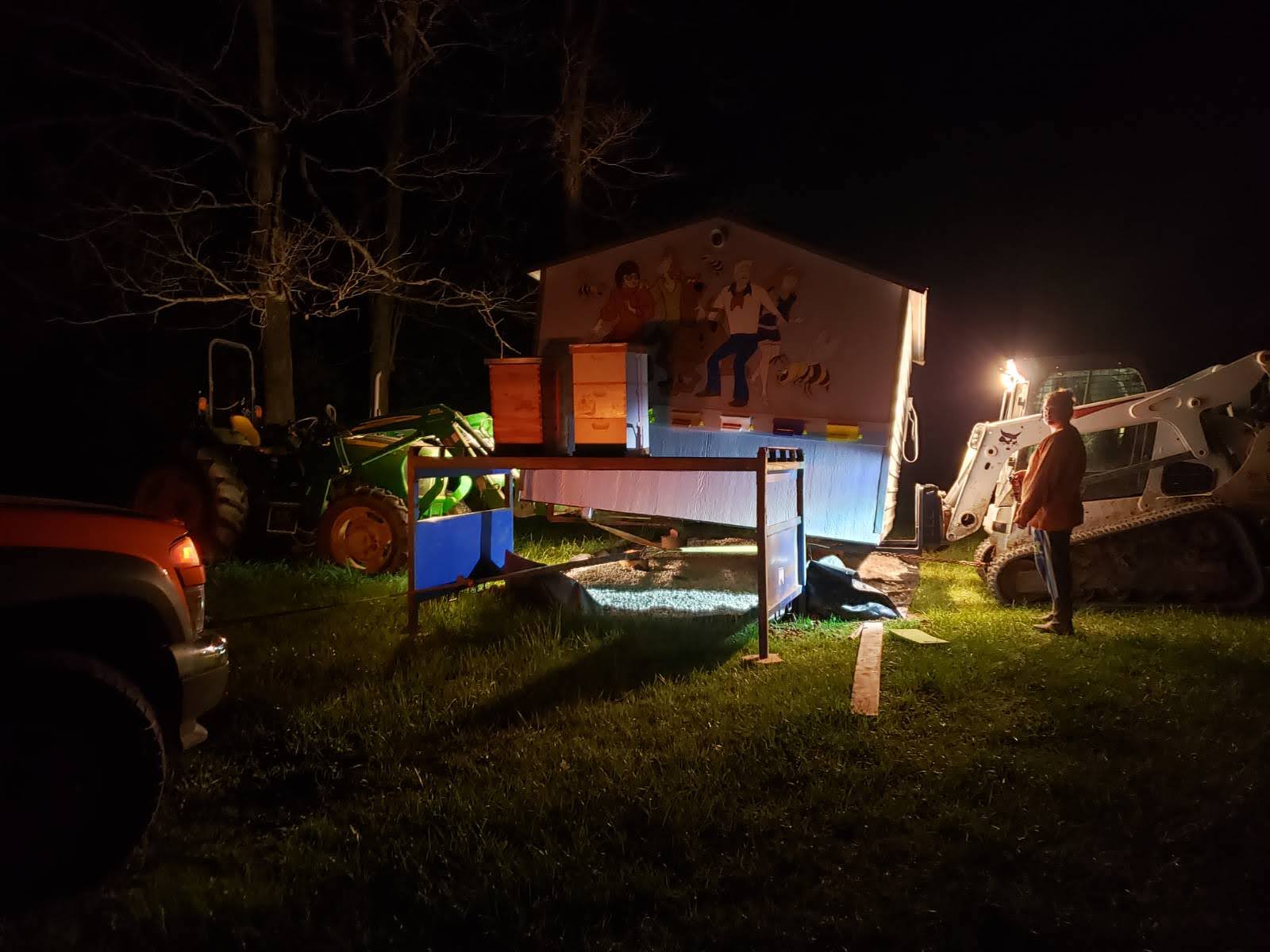
Moving the shed. This was the part that took the choreography. The shed was big enough that lifting it with a single piece of equipment risked tipping. So we used two — a tractor with forks on one side, a Bobcat with forks on the other, with a chain running between them. The chain kept the two machines moving at the same pace. If one inched forward and the other stalled, the shed would slide off the forks; with the chain, that couldn’t happen.
With the shed lifted to clear the pylons, we backed the tractor over the prepped pad with the Bobcat following, lowered the shed to within a few inches of position, then unhooked the chain. From there, a truck with a strap on the corner did the final maneuvering — slow, controlled, no risk of tipping. Got it within fractions of an inch of the target.
The bees. Then we had to move the colonies. Catching the day-of swarm came first — we got them collected and put them straight into the shed, into one of the empty hives waiting behind the Velma entrance. The other two colonies came next, transferred frame by frame from their Langstroth boxes into the AZ chambers behind their assigned entrances.
By the end of the day, the shed was in place, the bees were inside, and we had three colonies in three of the six hives — Velma, Shaggy, and Wasp, as shown by the reducer positions. Three more hives waiting for future swarms or splits.
It was a long day. None of it really felt like beekeeping. But by sundown, less than a year after that first swarm landed in our laps, what we’d been picturing all winter was finally standing there in front of us.
Next: The Bee Shed: An Interior Tour — what’s on the inside of the shed now that the bees are settled.